How To Find Inspiration

If you’ve ever found yourself lacking inspiration, here’s a few ways to find it.

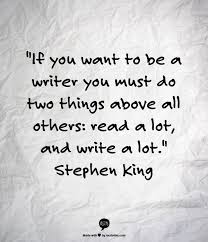
1. Read books. Not any book, a book you wished you wrote. This way, you might be inspired to write your own.

2. Music. Music inspires many to write. It enhances your brain waves and when you enhance your brain waves, who knows what will come out?

3. Cemeteries. Now why would I count cemeteries as a way to get inspired? Because they aren’t just a collection of dead people. Each inhabitant has his or her own life story. Consider the woman lying in a single grave while the rest of her family lies in a family crypt. What happened in that family to cause such a rift?

4. If you’re writing a novel set in the here and now, you won’t pay much attention to architecture. You’re bound by the constraints of what exists. But if you’re writing fantasy? The world is your oyster.

5. You may never feature a funeral or even death in your story. But knowing how death works within the world you’ve created is still important. It gives you an opportunity for world-building and character development.

6. Are you writing a contemporary novel set in your hometown? That’s okay. It’s still worth considering how your characters respond to death.

Think about these questions. Discuss them with writer friends to see what you come up with.

• What relationship do your characters have with death? Is it feared, accepted, or welcomed?
• Do characters grieve openly, or is death a cause for celebration? Do they grieve in private?
• Are wakes joyful parties, or somber occasions?
• What happens to your characters when they die? Are they buried, cremated, or subject to another burial practice like exposure?
• Do the dead come back? If so, in what form? (This is a great way to begin a short story or novel.)
• How would your characters feel to kill someone? Death can be a somber time of pain and loss. But it can also add dimension to your characters and plot. No one needs to die in your books for you to know how this element of your world-building works. And knowing how characters cope with, or react to, death gives you a better understanding of them.

Lastly, devise a range of plot points or find interesting opportunities for character growth. The approach your characters take towards death colors their outlook on life. That filters into other encounters and affects how they treat each other. They find their place in the world based on their understanding of death. You can explore this from the comfort of your nearest cemetery. Yes, once again, cemeteries. They’re an invaluable resource for character generation and world-building. Even sitting among the trees with your notebook, soaking up the peace and quiet, can boost your writing by creating mental space. But be respectful and who knows what you might find?

———————————————————————————————————
Sue Powers has a dazzling array of publishing credits. Among her favorites are New Millennium Writings, Another Chicago Magazine, Happy, Facets, The Writer’s Place, Funny in Five Hundred, Blue Lake Review and Samizdada. She has won some writing awards and been nominated for others.

Reminder: She’ll be teaching Writing the Short Story at Hershey High School in Arlington Heights September 5-October 17th, from 7 pm to 9 pm.


Managing Stress as a Writer

Do you feel guilty because you haven’t written anything this week? You’re tired, you’re burnt out, you can’t work and write at the same time, and your husband/lover takes precedence over your writing. And instead of writing, you’re working out or playing games, or shopping, cooking and cleaning out your closets. Anything but writing.

I’ve written 12 stories and one micro-fiction (a short story under 50 words) since I’ve retired, but I suddenly stopped writing. I stopped writing because I stopped reading. Reading is inspirational. But I haven’t found a book I like or can even recommend, causing me stress. How to deal with this? See a therapist? A therapist isn’t going to cure my writer’s block – if such a thing even exists.

We all like to think we’re super-human, but we can’t do everything. So sit down and write out what you want in your life. Think about what suits your personality. Think about the rhythms of your life. You need to allow for seasonal shifts in your energy (creative or otherwise) and how much your projects mean to you. Writing these things out will keep your mind active. And who knows? These writings may become a short story, an essay or a piece of creative non-fiction. ‘Guilty Pleasures.’ ‘Anxiety For All.’ ‘Creative Jumps.’ Well, not great titles, but you get the idea.

So…. what is stressing you right now?
• Do you recognize any physical or mental symptoms of anxiety or even burnout? Write them all down even if they are not specifically related to your writing life. It’s often the cumulative effect of everything that results in stress.
• What action can you take right now to reduce some of your stress or anxiety? Will listening to music help? Playing word games? Reading a good book? Traveling?
• Are you allowing for the seasonal shifts of the day, week, time of year? How can you factor that in effectively so that it will enhance your creative mind?

I suggest you keep reading (I assume you do) and take a vacation from writing. New surroundings may open up your creative juices. Walk through a forest. Go to the beach. Visit friends. Listen to music. Go somewhere locally, go out of the country. But go. Your writer’s mind needs fresh inspiration that a new local might provide.

Sue Powers has won some awards, and has published 18 stories. She’s now working on her book of linked stories, entitled A Surprising Measure of Subliminal Sadness. She will also be teaching Writing the Short Story, September 5 – October 17th from 7-9 p.m. at Hershey High School in Arlington Heights, Illinois.

How to get Published

via How to get Published

How to get Published


The first thing to do before you submit your manuscript for publication is to have it proofed and edited. Publishers demand it.

I’ve heard publishers say that they send their authors’ books out seven times just to be proofread. So proofread everything before you submit. Of course this can be costly. So first ask a couple of friends to proofread. Then send to a professional proofreader. It’s worth doing. So many publishers won’t even look at your manuscript if it has grammatical errors in it.

The second thing is patience. Yes, I know I’ve said this before but one must have a great deal of patience. Patience in finding the right publisher and patience in waiting to hear from the publishers. Most magazine editors tell you it takes 3 to 6 months to hear back from them. If you don’t have patience, you’ll never get published.

It’s okay to multiple submit, as long as you tell the magazines that you’re withdrawing your story because one magazine has accepted it.

Where to Submit:
I use Poets & Writers (a good investment which also happens to be deducible), both the physical magazine and their online database. I use the online database most of the time. It offers many options. However, their online database can be frustrating. Often, the magazines want something very specific or their word count doesn’t match what you want to submit. Still, it’s good database, one that every writer should invest in.

If you want to submit your book, it has a database of agents and publishers. If you are submitting your memoir, it has a database for that too. And of course if you’re submitting your fiction, there’s a database for that. In fact, it has a database for almost any kind of writing.

Recordkeeping:
I suggest you keep a record of where you’ve submitted your manuscript, especially if you have more than one. If you have more than document submitted, name each by where you sent it (ex: 13 Rules_ New Millennium Writings.) Otherwise, it can be very confusing.

Here’s an example of why you should keep good records of what you submit: Once I had a publisher asked for the copy of the story I sent them to be sent back to them. I had no idea which version I’d sent them. Caused many sleepless night. But eventually, it all got straightened out.

I keep my records in various ways in one Excel document. One workbook for stories by name and where I’ve submitted them; one by the name of the publication and the cost to submit (most charge a small fee), and another with stories that have been published.

Once you’ve submitted, you will likely get rejections. This is something every writer experiences, thus writers need a really tough skin. Once you’re manuscript has been rejected, say more than once, go back and see if you need to edit it. Have someone else look at it too.

This all takes a great deal of patience and tenacity, as does the writing. So now that you know how to get published and what qualities you need, start submitting!

_____________________________________________________________
Sue Powers has a dazzling array of publishing credits. Among her favorites are Facets, StoryQuarterly, Another Chicago Magazine, Happy, The Writer’s Place, New Millennium Writings, Funny in Five Hundred, Samizdada, Blue Earth Review and Microfiction Monday. She’s won some writing awards and been nominated for others. She now has 17 stories published. Her most current published story can be found here: https://microfictionmondaymagazine.com

How to be a Writer

via How to be a Writer

How to be a Writer


What do you need to be a writer?

No matter what kind writing you want to do, you must read the kind of writing you plan to write. This is the maxim of every writer I know.

You also need an imagination. Now where does your imagination live? I imagine it comes from somewhere inside of you. The gut? The unconscious? Your heart? Your brain? It’s really difficult to say but I do know how to access it.

First you put away your editor. Your editor will always get in your way. Second, put a pen in your hand and piece of paper in front of you. Then start writing. Don’t think, don’t stop, let your imagination run wild. It doesn’t matter if what you write stinks. It’s the accessing of your imagination that counts. If you happen to write something good, go to your computer and enter the text you’ve written then keep on writing. You can edit later. The point is, get it down and keep on writing.

Next is craft. I know many don’t want to take the time or effort it takes to improve their craft. But if you want to be a successful writer, you must improve your craft. One way to do this is to join a writing group. You also must continue to read. Reading provides inspiration and education.

It provides education through the way the writer writes. There are also many books out there that are instructional. One of the books I’d recommend is 1,001 Tips for Writers by William A. Gordon.

If you have to mimic this author’s prose, go ahead. But don’t leave it there. Try to write your own way. A successful writer has his or hers unique style. Mimicking other writers is only a way to begin to craft your own style. This might take weeks or even years, so a writer needs tenacity.

Doesn’t matter what you write, you need to access your brain, your imagination and create your own style. You also need to dig deep inside of you and pull out memories, secrets and things you don’t want to remember.

So start accessing your memories and your imagination, beginning now….

Sue Powers has a dazzling array of publishing credits. Among her favorites are New Millennium Writings, StoryQuarterly, Another Chicago Magazine, Happy, Facets, The Writer’s Place and Samizdada. She’s won some writing awards and been nominated for others. She now has 15 published stories.

How Organizing Can Help When You Can’t Give Up Your Stuff

sjpowers's avatarsue powers

by Marilyn Labendz

.

Need help? If you can’t give up your stuff, you do!

Having just listened to George Carlin’s routine about “Stuff,” I found it funny and true. As he says, “Houses are just piles of your stuff with covers on them.” And should you get robbed, “while going out to get more stuff, they only take the good stuff. Nobody else wants your 4th grade math papers!”

Organizing or Downsizing, the dilemmas and the decisions are the same.

Ask yourself:

  1. What defines me?
  2. What are my prized possessions…(Or do they possess me?)
  3. If I had to leave in a hurry, what could I not part with?
  4. What items do I have that I haven’t looked at or used in the past year or two…or ten?
  5. What things are worth the physical and financial cost of moving from place to place?
  6. Can I rise to the challenge to…

View original post 457 more words

Weighing on My Mind

sjpowers's avatarsue powers

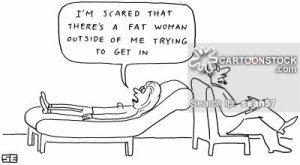
'I'm scared that there's a fat woman outside of me, trying to get in.'

By Guest Blogger: The Oldest Living Middle-Aged Writer

 I’m closing in on losing 50 pounds as we begin 2015, and while I have more poundage to lose, I am close to my goal. Just last night I found a hip bone and my happiness bordered on that of an anthropologist unearthing the hip bone of a prehistoric mastodon.

As someone who has read every story available on how to lose weight, I’m sure you’d like to know how I did it. You want to see before and after pictures. You want to know if I have found a simple, painless way to lose weight. Well, get used to disappointment. I didn’t find it and pictures are not yet available.

I also didn’t have an epiphany. I simply got on the scale one day and clearly saw that there was no ceiling on gaining weight. Left to my own devices, I…

View original post 363 more words

It’s the Bomb (worth reposting)

I’m clearly an addict. First it was reading, then cigarettes, then alcohol, then cars, then men, then writing, then fast cars, then fast men, then women, then fast women, then more reading, writing…. Ok, I embellish some. Ok, maybe a lot. Sorry. It’s the fiction writer in me. But I have always been a reader and a writer, in love with words.

Now my addictions have reached new heights: to the FB word game, Lexulous. Which like my other addictions, got me the first time out, now totaling more than 2200 games. I can’t seem to turn away from it, though why I would want to is beyond me.

See, this word game has got a UK dictionary, which is the bomb. Ever hear of Ch? Qi? Qa? Ky? All perfectly wonderful UK words! Which is a big deal to me, because when I was addicted to board games, I was always swearing something like these were words, and the U.S. dictionary was always disagreeing. Now that I’m playing a word game with a UK dictionary, well what can I say but oh joy!

Of course Lex isn’t perfect. First, you can only play this game with your FB friends, so if you don’t join the ‘club,’ you can’t play. Which is very junior high, a place I don’t care to go back to. Second, it’s quite temperamental and changeable (for the simple sake of change, no less), and when it’s totally out of sorts, might be unavailable for the entire day!

But I’ll say this, unlike some of my other addictions, it’s not harmful to me or to others (unless I’m playing Lex while driving – not!), nor is it selfish or jealous. If I want to play a little Wordscraper, Lex or Words with Friends, for instance, it doesn’t get angry and shut down. Plus I have friends who like Lex as much, or nearly as much, as I do. Which makes life a little easier than if they scorned it, ya know?

Plus it’s free. No upkeep. No ashes. No cleaning up after. No arguments. No woozy head. No rejections, proofreading, or revisions— just pure word play!

Best of all, Lex has tiles the cats can’t walk across or place their little butts on. Ah, heaven!

So…game on!

#
We can be FB friends if you want to play Lex with me. You can also find me at https://www.facebook.com/sjpstories. (Yes, the shameless promoting begins – ugh!)

One or Two More Stories….

I have one or two more stories to update and that’s it! I’m sending my book of linked stories, A Surprising Measure of Sadness, out to get published.

That is, sending it once again. Unfortunately, I have sent it out before two of the stories were updated per my writing group. My writing group is the best thing that’s happened to me. Their comments and their critiques have been invaluable. Meanwhile, I didn’t wait. Oh well. There are still publishers who Will (stay positive!) publish my book of stories.

It takes months, even years, for stories, not to mention a book of stories, to get published. So I’m not getting my hopes up that it will be published in 2018.

One of the stories in the next book I’m writing got a comment from the famous author Aimee Bender. (How that happened is another story.) I’ve sent this story out numerous times. But as my first writing teacher told me it takes maybe 20 tries before a story gets published.

I’m still sending out the stories in my current book out for publishing. I have 15 stories published, but not all of them are going into my current book of stories because I can’t linked them to the other stories. I have written a couple of new short stories that will go into the next book. Meanwhile, I’m continuing to read because reading is the only way I can get inspired to write.

This coming weekend my writing group meets and I’ve submitted the two stories that need updating for my current book. Once they’re updated I hope to be able to send out A Surprising Measure of Subliminal Sadness.

Wish me luck!