Category Archives: Blog Post SJ Powers
How to Spot a Scam
Want to know how you can smell a scam from a mile away? And I don’t mean by heading over to the Google to punch in “Is (such and such) a scam?”
Because like attracts like, indeed you’ll find some people calling (such and such) a scam.
More than that, they’ll trash the heck out of it, then try to sell you on joining their down line on some pyramid scheme.
Here are a few questions you can ask yourself to cut through the B.S. and tell if it’s a scam or not.
1. How long has that business been up and running?
2. Do they have a money-back guarantee?
3. Do you have PROOF that it works before you buy?
Keep these in your back pocket. They will help you expose a scam.
_______________________________________________________________
Sue Powers has had many short stories published. She’s also written a mystery, She’s Not There, that will published soon. She’s also writing another mystery.
Three Ways To Cultivate Discipline In Your Writing Life
Three Ways To Cultivate Discipline In Your Writing Life

Finding the time and discipline to write is a challenge for many authors. There are three easy ways to make the most of your writing time each day.
Does creativity strike when you’re messing around and having fun? Does being laid-back and disorganized spark the most creative masterpieces? Many people believe that creativity is a product of the scattered brain. Some experts even argue that there’s research to support this theory.
While the archetype of the mad genius is a common one, the truth is that the most successful creatives are actually extremely disciplined when it comes to their work.
Unlocking creativity isn’t about sitting back, goofing off and waiting for inspiration to strike. It’s about meticulously curating the right conditions to foster creativity.
Even if you aren’t familiar with his theory of relativity, you’ve probably heard of Einstein. Albert Einstein was one of the most innovative thinkers in history. The disheveled scientist is the poster boy of the messy genius archetype.
Einstein’s desk was famously photographed on the day he died. The picture reveals a chaotic landscape of papers and books.
“If a cluttered desk is a sign of a cluttered mind, of what, then, is an empty desk a sign of?”
But behind Einstein’s messy desk was a regimented mind. In Daily Rituals: How Artists Work, author Mason Currey records the daily schedules of the world’s most creative people. In his book, Currey refutes the belief that Einstein had a hectic or disorganized life.
Einstein’s schedule was actually regimented around his work. As a rule, Einstein worked at home after dinner to finish up anything he didn’t complete at his office. And his shaggy bed head served a practical purpose: he kept his hair long to avoid barber visits.
Einstein was disciplined, and he’s not the only one. People like Steve Jobs and Jeff Bezos didn’t succeed by fooling around until they struck gold; they each worked within the confines of a routine that helped them to be creative.
Creatives, freelancers, and entrepreneurs all share a unique problem: lack of order. Most creatives don’t have a traditional job with scheduled work hours. They don’t have bosses or coworkers to hold them accountable. They don’t need to be anywhere at any specific time. Some don’t even have concrete deadlines for their work. Though I have a part-time job, I make sure I have time to write.
Creatives need to foster self-discipline. This is much easier said than done, especially for absent-minded types. Without discipline, you might find yourself doing nothing all day.
The hardest part of any task is getting started. Steven Pressfield writes in his acclaimed book The War of Art, “It’s not the writing part that’s hard. What’s hard is sitting down to write.”
Here’s how you can find inspiration, be more innovative and unleash the power of your creativity.
1. Make a schedule and stick to it.
If you’re a struggling creative, chances are you don’t have a schedule. Or maybe you do have one, but you don’t follow it. In order to maximize your creativity, you need to have a schedule. More importantly, you need to stick to it.
Many creatives make the mistake of over-correcting here. They create a minute-to-minute blueprint for their day. This can result in fatigue and emotional exhaustion. Instead of taking this unrealistic approach, simply map out the flow you’d like your day to have.
Maybe you want to exercise, work, eat lunch, do some more work, and call it a day. Once you understand what your ideal day looks like, nail down your schedule by attaching times to each activity and follow that plan the best you can. And absolutely do not forget to sleep.
Planning is easy, but executing a plan (especially a daily plan) requires a good bit of willpower. If you want to work from 9AM to 1PM, you need to work for those four hours. Plan in some breaks if you feel that you need them, but remember to work consistently.
2. Separate your workspace from your living space.
Another problem that gets in the way of creatives is their environment. Where do you work right now?
Many creatives lack designated workspaces and that’s a big reason why so many of them struggle. It’s hard to shift gears between work and play when you work from home.
3. Set a dress code for yourself.
It’s not only where you work, but what you work in.
It’s a cliché that freelancers work in their pajamas. If you want to be creative and productive, you might want to toss that advice in the trash. What you wear has a direct effect on how you perform.
Donning a hoodie and sweats every day encourages you to be a little lazier.
Create a dress code for yourself during your work hours. You don’t need to wear a penguin suit or ball gown, but you should choose clothes that encourage professionalism. That may mean a crisp button-up shirt and slacks or jeans and a blouse.
Find what works for you. Just don’t get too comfortable. Remember: you’re at work.
3. Cultivate A Habit of Discipline Today
For most creatives, developing discipline is the largest obstacle in their way. Using a work checklist can also help to stay on the right track.
Sure, you can search high and low for a new source of inspiration—but why not tap into the potential that’s already inside you?
If you’ve exhausted sitting in front of a blank screen or canvas, give these techniques a try. You might be surprised at what you can achieve with a little order.
How disciplined are you about getting your writing done?
_________________________________________________________________
Sue Powers has had many short stories published. She’s written a mystery called, She’s Not There, and is writing another mystery.
The Science of Sound
The Science of Sound

Noises surround you every day. The hum of the refrigerator, the chirping of phones and appliances, the roar of certain power tools. Consumer Report’s latest special feature dives into the science of sound and the effect of these sounds on our lives. Get an inside look that includes how they measure noise on common household appliances and why we assess sound quality.
Working outdoors with the lawn mower, snow blower and even the weed trimmer could have consequences on your hearing. Find out how you can protect your ears, and take a look at the best noise cancelling headphones.
You don’t have to spend hundreds to get the best sound from headphones. Consumer Report tested dozens of headphones and you might be surprised at the lower-cost models that earned their “Best Buy” designation.
Do I recommend Consumer Reports? I do because Consumer Reports tests items from car to gadgets.
____________________________________________________________________
Sue Powers has published many short stories. She also wrote a mystery, She’s Not There, that will be published soon. She’s now writing another mystery.
Watch out for the Dangling Participles
Writing a book is like building a house with a chisel, saw, and a box of Cocoa Puffs. As soon as you pour the foundation, you find out it isn’t level so you have to re-pour the cement floor. The door fits at the top, but not at the bottom so you have to stick shims in the frame. The window fits like a glove but the shutters are the wrong color and you spend most of the day looking for the right color.
Chapter 2 plods along like an old lady at a flea market. You need synonyms for the word “mound.” How would you describe the female breast? There’s a dangling participle in Chapter 5 that needs either an ambulance or a preposition. You have too many people sitting on the couch because it only has three cushions and there’s a dog on somebody’s lap. It’s not easy. There’s a traffic jam of words in this book that fail to describe the situation and you have accepted the mission impossible of linking them in a coherent order.
One day leads to the next and finally you arrive at the denouement. The unraveling. Characters have died and you have to account for them. It fits. Your book has a roof, drywall, and insulation. Now in the second draft you have to add some paint and finesse.
Congratulations you have written a book! Even if it isn’t done yet, you’ve accomplished what few writers before you have done–you’ve finished something. Now open that box of Cocoa Puffs and grab your hammer and nails. There’s work to do before you can hit the “PUBLISH” button.
—————————————————————————————————
Patricia Childers is a writer and editorial development editor at MBH Publishing Co., and she is an advocate of good writers who strive to be better writers. She has a book in process titled “Too Much is Never Enough,” a mystery set in Georgia. She can be reached at Pat@MyBlueHorse.com.
Tips To Hone Your Writing
Here are ten tips to help you hone your focus and provide some actionable steps to knock your story/novel/ mystery into shape.
1. Identify theme or message
What drove you to commit to writing this book? What is the purpose of your story? What is the truth) you are trying to share with the world? Even a mystery can hold truths.
Understanding the story’s core will provide a lens in which to view your characters and scenes during the developmental editing stage.
Maybe you want to explore an emotion such as rage, or the consequences of acting on unconscious beliefs. Whatever the theme, ensure your book as a whole answers the question you implicitly proposed in the beginning.
2. Focus on the beginning
The first line sets the tone for the rest of your book. Rework it. Test out alternatives. Make sure it hooks the reader into your unique world and shows them what to expect.
As an example, compare the draft version of 1984’s opening line:
‘It was a cold day in early April, and a million radios were striking thirteen.’
With the version that went to print:
‘It was a bright cold day in April, and the clocks were striking thirteen.’
Can you see how a small tweak makes such a dramatic impact?
In one short line, Orwell has managed to convey something fundamentally wrong with the world he is about to plunge the reader into, and by the end of 1984, we understand what that is.
One of my favorite sayings is: ‘the end is in the beginning and the beginning is in the end.’ Review your beginnings and ends to see how well they tie together.
3. Identify core conflict and reveal it through action
You had big plans for your book and there’s so much in your head to somehow make real on paper. Trying to cram everything you want to say into the story will slow it down and choke the plot.
Keep in mind your theme or core message as you examine each scene, highlighting the crucial plot elements and gearing your efforts to revealing it through the actions, reactions and thoughts of your characters. Cut away anything that is weighing the plot down or isn’t pushing your protagonist to grow and adapt.
4. Avoid head hopping
Pick a point of view and stick with it. New writers tend to forget who is narrating each scene, chopping and changing between characters. This is known as ‘head hopping’ and can be very distracting, and usually means that the writer hasn’t decided who the reader should care about most.
The key is consistency – if you want to be an ‘omniscient narrator’ abide by your own rules. It’s usually a better idea to stick to either first person or third person limited, which means writing from one character’s viewpoint per scene or chapter.
That’s not to say you can’t have multiple points-of-view throughout the book, however, just be clear and consistent.
Another common mistake is to describe something happening when the character in question couldn’t see it from their point of view. For example, John is gazing out of the window when Jane walks into the office, yet he knows she is blonde before he even looks at her. Glitches like this destroy credibility.
5. Seed the background to your characters’ fatal flaws
No one is perfect, not even fictional characters. Having said that, the flaws they have should make sense and should be seeded throughout the book.
That goes for the antagonists too. There’s nothing more disappointing than when a bad guy fails against the hero because of some sudden, previously unknown flaw. Every thought, action, and reaction must be informed by your characters’ personal history and beliefs.
6. Give your characters quirks
Humans are complicated creatures and although your characters aren’t actually real, the reader needs to empathize with them as if they were flesh and blood. To do this, make your characters distinct from each other, with their own quirks and foibles.
Think about:
• Mannerisms
• Style of dress
• Physical imperfections
• Props (e.g., Indiana Jones’s whip)
• Nervous tics
• Unconscious habits such as whistling or pen clicking
7. Vary descriptions using other senses
People tend to favor one sense over the other, and for most of us, that’s the visual processing system. Writers are no different! But neglecting smell, touch, taste, and sound can flatten scenes.
Consider how these different types of smell can have such a dramatic impact on your environment, comfort levels, and memories:
• Perfume
• Body odor
• Freshly cut grass
• Decay and death
• Floral smells
• Cleaning fluid
• Animal smells
Think about the emotions these scents and odors would trigger in your characters. Can you see how broadening your range of descriptive devices can increase the reality of your settings?
8. Cut clichés
Clichés are so last century. Every word, phrase, and sentence should have an impact, but clichés dull the effect because readers have become numb to these hackneyed expressions.
The only exception to this is within dialogue; clichés can reveal the mindset and cultural background of your characters. Don’t overdo it though.
9. Maddening multiple metaphors
Metaphors are wonderful and add richness to your writing, but it’s easy to mix them together and lose the precise meaning – or use more than one in the same paragraph.
If this happens often, you’re probably trying to describe too much. Pick the essential point of the scene or paragraph and focus on that and cut the rest.
10. Keep raising the stakes
Conflict is at the heart of storytelling. No one wants to read a story where literally everything is perfect and nothing ever happens. What would be the point?
Make sure you vary the stakes at key plot points to maintain the reader’s interest and keep your characters challenged enough to grow and develop.
However, starting out with extremely high stakes in order to hook a reader in can backfire because everything that happens afterward can feel like an anti-climax. Pace yourself and turn up the dial of conflict as your plot develops to reach a satisfying conclusion.
After implementing the steps outlined above, your book should have an intriguing opening, a fast-moving, compelling plot, believable characterization, and enriching descriptions.
That’s not to say that you will have picked up on every issue within your manuscript. Objectively is very difficult when you are emotionally invested in your own work. Which leads me to your bonus tip:
Stop editing. Let someone else do it!
There’s only so much you can do alone. For those on a tight budget, this might mean handing your book to a trusted beta reader. For others, sending it to a professional editor is your best bet.
At the very least, by taking the time to really analyze your work, you’ll learn more about your unique writing style and develop a greater awareness of your own quirks and foibles. That can only be a good thing.
__________________________________________________________________
Sue Powers is an accomplished short story writer. Her most recent publication was in Saturday Evening News.
She has written a mystery, and is writing another.
How To Be Human

Being human isn’t as easy as it used to be; it now requires gadgetry. Speaking as one who can barely operate a can-opener without risk of dismemberment, I would like to formally protest the ever-escalating onslaught of technological frippery that threatens far more than life, limb or thumb. The very soul of humanity is at risk (inasmuch as catatonic tweeters qualify as humanity). Humankind – or its reasonable facsimile – is on a collision course with electronic lunacy.
In an effort to look busy, The Department of Innovations in Frustration has developed the automated phone system. If you’ve ever felt the life-force drain from your body as you navigate through a series of buttons and recordings, you’ll long for the bygone days of simpler, yet more efficient systems like yodeling or smoke signals. Dropped calls on your cell phone spark nostalgia for the superior reliability of two tin cans joined by a string.
Fast-food intercom systems likewise confound communication. Ordering a bucket of wizened chicken should be a simple matter, yet something always seems to get lost in translation (namely your food). When speaking through those vexing voodoo boxes at the drive-thru, it’s often unclear whether you’ve successfully ordered hot wings or booked passage to the underworld.
Another source of dread is the ticking time-bomb of the computer keyboard: the “Reply All” button. One distracted slip of the fingertip and that scathing critique of your boss’s toupee threatens to render you unemployable.
And then there’s the sinister satellite signal that always seems to be lost during the play of the century (insert favorite sport here), but never during the antacid commercials.
What’s the antidote to these soul-crushing techno-traps? A refresher course in how to be human. Consider making a few subtle changes in your dependence upon technology:
Instead of paying for costly video games that simulate dancing, try dancing. Rhythmic movement of the arms and legs is a primal urge felt by many humans (and orangutans) that requires no formal training (with the exception of suburban males). The only risk involved is catching a glimpse of oneself in a mirror which can lead to self-loathing and isolation.
Rather than e-mailing a co-worker, utilize the power of human speech. Nothing separates man from beast so much as the capacity for verbal communication. Although, five minutes of mind-numbing conversation with your chimp-like office-mate is likely to send you reaching for a blunt object, a major setback to your anger management program.
Abandon the isolation of the exercise treadmill in favor of a brisk walk in the great outdoors. Push from your mind the time you stumbled clumsily into oncoming traffic and escaped certain doom only by falling down a coverless manhole.
Reject the dehumanizing practice of severing a relationship via text message and meet in person, preferably in a social setting like a café. Though risk of flying cutlery and public humiliation loom large, isn’t it worth it to reconnect with humanity?
On second thought, perhaps there are advantages to dehumanizing technology.
____________________________________________________________________
Eileen Mitchell is an award-winning essayist and playwright with recognition from The Robert Benchley Society Thurber House and the Will Rogers Writers Workshop.
Beyond the Five Senses
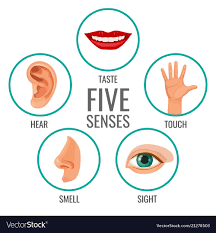
We think there are only five senses: touch, taste, smell, sight and hearing. But neuroscience says this is wrong. There may be as many as 22 to 33 senses according to the latest scientific research. That’s what the neuroscientists tell us and that gives us between 17 and 29 more reasons to celebrate as writers.
The more tools we have in our writer’s toolkits, the wider our range and the more chances we have of reaching wider audiences.
We intuitively know about many of these ‘new’ senses but most of us neglect to apply these valuable gems in our writing. They can be vital for creating unique characters and character worlds.
As master writer Stephen King says, we want our readers to “prickle with recognition” when they read our writing and what better way than to manipulate some of the many senses most of us instinctively recognize but aren’t taught to identify as universal, human senses.
One of the most fascinating under-talked about senses is the physiological sense of balance. This sense enables us to walk without falling.
This applies equally to animals and humans. This means a dog or a cat with no sense of balance could provide as much comic relief as a person who lacks a sense of balance could provide tragedy in your writing.
Even something as simple as a character with a cast on his arm or leg loses the full sense of balance and can be used by an adept writer as a unique handicap in a story.
Consider riding on a merry-go-round. A disturbance with your sense of balance can make you feel nauseous, dizzy, or disoriented. This could apply equally to a character who has overdone it in an amusement park as it can to someone with Alzheimer’s or vertigo.
Another fascinating sense is the ability to detect magnetic fields to pick up direction, location, or altitude.
Roughly 50 different animal species that we know of use the Earth’s magnetic fields to get around. These include birds, insects, and mammals, including mice and bats.
This sense would come in truly handy when you’re trying to get somewhere, especially if you’re lost in a dark forest, in cold outer space, or in a magical maze.
Detecting magnetic fields, altitudes, and locations can be used by writers who stick with realism, too. We do have a mineral called magnetite in our brains and bones. Perhaps scientists might figure out that humans can detect magnetic fields, and that scientist might be the main character in your next novel.
A neglected sense in much of our writing is our sense of time. The ability to perceive long vs. short periods of time passing may come from two different parts of our brain, but either way, it’s a great sense to manipulate in your writing.
When did you last read a book in which one of the characters couldn’t track time? Yet, it opens up so many possibilities for unforgettable, relatable characters we can all empathize with. All of us know at least one person who doesn’t seem to have any sense of time.
I’m not even talking about toddlers who lack the brain structure to even comprehend a sense of time. Yes, little kids really do live in the ‘now.’ Emotions often run high around people big or small who have no sense of time and that makes for great drama in a novel.
I used the sense of time as a writing exercise in one of my classes and one class participant based an entire short story around it.
Another sense you may not be able to define and that you should add to your writer’s toolkit, is the ability to distinguish your body from the rest of the world and move it (i.e we can scratch our feet without looking because we know where they are).
Before we pick anything up, we have a sense of how much effort will be required to successfully lift it. If you take a deep breath and prepare yourself to haul a heavy suitcase only to discover it’s empty, you are momentarily thrown off balance.
Though I encourage writers to apply under-used or never-used senses to liven up their writing, it doesn’t mean the classic five are in the clear. At least two of them need to be revamped: smell and taste.
We can smell a lot more than roses. Here’s some information about our olfactory sense that you can use to apply the sense of smell in new ways in your writing.
You can move way beyond sweet, spicy, and citrus perfume, a trillion scents beyond, in fact. Yes, humans can sniff over one trillion scents, including fear and disgust (through sweat).
There’s a reason why your mom was always telling you to wash your runners. Women do have a superior sense of smell. Consider that the next time your heroine walks into a laundromat or a gym.
Everything one writes about smell applies to everyone’s favorite sense: taste. Don’t be afraid to explore beyond the standard sweet, sour, salty and spicy (crunchy peanut butter anyone?).
Scientists are split on whether we can taste savory (cheese, meat), fat and calcium. Why not have a heroine who can’t bear the taste of fat or calcium engaged to be married to someone whose greatest love is to cook for her using many fat and calcium-filled ingredients?
Could expanding your use of characters’ senses change and improve your writing? Please leave your thoughts below.
 sue powers