Self-injury


Guest blog by Matt Cortez

In a place no one can see, maybe in the dark of night, someone is slamming himself or herself in the head with a blunt object. Or, someone is cutting his or her arms not to commit suicide, but to inflict pain.

This is called “self-injury,” a behavior I’m quite familiar with. I have been beating myself in the head since 2006.

Most if not all people who engage in this type of behavior suffer from some form of mental illness. Friends and family often can’t or don’t want to understand what it’s like to be mentally ill, and many have abandoned me because of it.

These acts evoke images many people don’t want to see. But these people do walk among you. Is someone you see every day at the office or a parent dropping off a child at your kid’s school secretly suffering?

My partner knows I injure myself, and he has not left me. Unfortunately, he can’t do anything to prevent it.

If my partner sees a head wound of any kind, he will be very stern and abrupt, as he should be. “Why?” he’ll ask.

The only answer I can give him is that I am severely depressed. The goal is to inflict so much pain that it exhausts me.

Even in the process, I tell myself, “Two hundred times is not enough. I need another hundred.” And then I’m there: both in pain and peace. It’s a baffling juxtaposition. But I can sleep after I do it.

I’ve concluded there is no panacea for what I have — an illness with traits that torture me mentally and physically. Mental illness is this huge mosaic of illnesses inside an illness.

It’s a cancer we are neither trying hard enough to cure nor making bold advances to address.

Using cars as an analogy, we are not all “Pintos,” but we’re different vehicles sitting in a used car lot. Our lives are highways with different exits.

My car, you might ask? Metaphorically, sometimes my car is on the side of the road with a flat tire. It’s raining. It’s dark.

I’m frustrated, crying and alone. I have a blunt object in my hand that I drop to the ground.

—————————————————————————————————
Matt lives in Pennsylvania and suffers from bipolar disorder with self-injury tendencies.

Marketing and Writing

How much time do you spend writing vs marketing? I would imagine it depends on what you are writing. Say you’re writing a novel, a non-fiction book or a mystery. It takes a considerable amount of time to write these. But if you’re writing short stories, it takes much less time, so you can do more ‘marketing’ (I.e. getting your stories published.)

Short stories are different from full-length manuscripts. First, you don’t need an agent. Second, the first step is to get the story published. Lastly, once you’ve completed your book, then you can start marketing it.

In the days before Internet, writers would get fan mail in the post, actual physical letters, (some still do) and they would answer those letters. There are some great pictures of Hemingway standing up at his typewriter answering his letters every afternoon.

When people would do interviews, they would go on physical tours, to bookstores, or to fairs or different venues. Charles Dickens used to go around speaking. I believe people still go on physical tours to market their book.

Try and think of how you can integrate marketing in a sustainable way for you that’s creative and also meets the goals of what you want for your writing. Do you want to sell more books? Or do you want to become famous? It’s rare for an author to be come famous. So set your goal to sell more books. (By the way, I once had a student who wanted a formula to become famous author!)

Publishers rarely market their books other than putting them on their website. So it’s up to the author to market her book. The exception is Windy City Publishers. They’re a hybrid publisher that does the marketing for you. Of course they’re rather expensive, but if you are fed up trying to publish your book the traditional way, this may be the way to go.

There are other ways to self-publish. BookBaby is one of them. BookBaby offers print, e-books or print and ebooks. Plus it’s an affordable e-book self-publisher with no sales commission, plus your book gets an ISBN number through them. There’s also Amazon who publishes your book on Kindle.

I’m sure there are other self-publishing companies. Investigate and get back to me.

My Addicition

It’s not alcohol, cigarettes, heroin or any other illegal drug…. it’s word games!

One game is Lexulous – a Facebook word game. I love this game and each morning I play it. Lexulous, which is similar to Scrabble, offers two dictionaries. One is the US dictionary; the other is the UK dictionary. The UK dictionary offers many more two-letter words such as CH, KY, NY, FY, plus longer words that aren’t in the US dictionary. Plus, you’re allowed to use the dictionary while you’re playing.

I find it are hard to play Wordcrasher and Words with Friends (both are FB games) on my phone so I play these on my computer. Words with Friends also has a dictionary you use – but I find it’s US dictionary limiting.

Some who play Words with Friends find it more challenging. Maybe because I’ve played Lexulous longer and it has the UK dictionary that I obviously enjoy. When I play Words with Friends its fun but not very challenging. Plus there are words one can use in Lexulous that aren’t not in Words with Friends. However, more people play Words with Friends than Lexulous, meaning of course it’s more popular.

Let me now add Soltaire. I’ve become addicted to Soltaire. I’ve won (I think it’s rigged) many times and for some reason I’m addicted to it.

There are other games such as the card games Monopoly Deal, Karma and the word game Quiddler that I enjoy.

If you love word games, let’s play together. But watch out – you could become addicted!

Writing Tips: Find Inspiration through the Environment

If you are struggling to get words onto the blank page, don’t just sit there. Fill your creative well.

Here are some ways to do that:

1. The Music of Your Environment
This is how I turn the sounds of the world around me into fodder for inspiration. While you’re out for a walk, running errands, or just taking care of business, take a moment to truly listen to your environment.

If you’re driving to a specific destination, focus all your senses on the road and the traffic around you.

If you have a smart phone, tablet, or digital voice recorder, take down your thoughts for later use. You can also do this while sitting on your porch, after a long day at work, or running around with your family.

2. Inspiration through Music
If you’re in the middle of a scene and you can’t come up with just the right element to keep your story moving forward, here’s a tip that might help you focus on your work.

Turn on your favorite radio station or your writing playlist. Let the music resonate through your entire body and let your mind wander where the music takes you.

What ideas come to mind as you listen?

After the song or piece of music is over, pick up your mobile device, notepad and pen, or open a blank document in your word processor of choice, and jot down the tidbits that come to you. You may not be able to use them at the moment, but keep them for later use.

Even though you are a writer, do you also play a musical instrument? If you already have an instrument that you play, I have a suggestion for you. Why not sit down at your instrument, or pick it up and play whatever is in your heart.

Making your own music is just as powerful and inspirational, if not more so, than listening to recorded music, or attending a live concert.

3. Read, Read, Read!
I know authors and marketing professionals have discussed this topic on webinars and podcasts, but I want to add my encouragement to all writers, from novices to full-time authors.

You don’t have to rely on print or eBooks only, you can also get audiobooks to listen to as you work. I read a lot of books in my genre, but I also read other books, to find that little nugget of inspiration, when I am suffering from writers’ block.

I’ve heard it said that you can’t be a great writer without being an avid reader first.

4. Find other sources of inspiration
Although I stress the importance of reading to become a better writer, there are other sources of entertainment and information you can use for inspiration.

Many people mention that they become inspired by movies. Although I can agree with that to a certain extent, you don’t have to limit yourself to this medium only. TV shows and movies aren’t the only sources of inspiration I’ve found. If you can find an app or a website that has links to free audio recordings, such as classic radio shows.

Listening to podcasts is another great source of information and inspiration. Also, engaging with like-minded people is beneficial.

5. Here’s a tip that I think all writers can use in their writing process. Find a writers group, or a critique partner or group to help you fine-tune your writing before you get published. The more you can tweak your writing, the more likely others will read it.

Sometimes writers can inspire each other, so connecting through email or social media is a good way to “talk shop” with people who are walking the same writing road as you are.

You and your writing friends can encourage each other on your career path, and your mentors can hold you accountable for a project you are working on, so you can get it finished and into the hands of readers.

I strongly urge you to take advantage of these inspirational sources, because something that a character says or a description of a scene can lead to an idea that you can’t let go of. There are hundreds, possibly thousands of ways to find inspiration, these are a few of the methods that personally work for me.

I hope that you can find one or more of these tips helpful in your own writing.

How do you find inspiration for your creative work? Please leave your thoughts below.
____________________________________________________________________
Sue Powers has a dazzling array of publishing credits. Among her favorites are New Millennium Writings, Another Chicago Magazine, Happy, Facets, The Writer’s Place, Funny in Five Hundred, Blue Lake Review and Samizdada. She has won some writing awards and been nominated for others.

Reminder: She’ll be teaching Writing the Short Story at Hershey High School in Arlington Heights, September 5-October 17th, from 7 pm to 9 pm., Room 1080.
She’ll also be teaching How to Publish Your Manuscript at Morton Grove Library, sometimes in October/November.


How To Find Inspiration

If you’ve ever found yourself lacking inspiration, here’s a few ways to find it.

1. Read books. Not any book, a book you wished you wrote. This way, you might be inspired to write your own.

2. Music. Music inspires many to write. It enhances your brain waves and when you enhance your brain waves, who knows what will come out?

3. Cemeteries. Now why would I count cemeteries as a way to get inspired? Because they aren’t just a collection of dead people. Each inhabitant has his or her own life story. Consider the woman lying in a single grave while the rest of her family lies in a family crypt. What happened in that family to cause such a rift?

4. If you’re writing a novel set in the here and now, you won’t pay much attention to architecture. You’re bound by the constraints of what exists. But if you’re writing fantasy? The world is your oyster.

5. You may never feature a funeral or even death in your story. But knowing how death works within the world you’ve created is still important. It gives you an opportunity for world-building and character development.

6. Are you writing a contemporary novel set in your hometown? That’s okay. It’s still worth considering how your characters respond to death.

Think about these questions. Discuss them with writer friends to see what you come up with.

• What relationship do your characters have with death? Is it feared, accepted, or welcomed?
• Do characters grieve openly, or is death a cause for celebration? Do they grieve in private?
• Are wakes joyful parties, or somber occasions?
• What happens to your characters when they die? Are they buried, cremated, or subject to another burial practice like exposure?
• Do the dead come back? If so, in what form? (This is a great way to begin a short story or novel.)
• How would your characters feel to kill someone? Death can be a somber time of pain and loss. But it can also add dimension to your characters and plot. No one needs to die in your books for you to know how this element of your world-building works. And knowing how characters cope with, or react to, death gives you a better understanding of them.

Lastly, devise a range of plot points or find interesting opportunities for character growth. The approach your characters take towards death colors their outlook on life. That filters into other encounters and affects how they treat each other. They find their place in the world based on their understanding of death. You can explore this from the comfort of your nearest cemetery. Yes, once again, cemeteries. They’re an invaluable resource for character generation and world-building. Even sitting among the trees with your notebook, soaking up the peace and quiet, can boost your writing by creating mental space. But be respectful and who knows what you might find?

———————————————————————————————————
Sue Powers has a dazzling array of publishing credits. Among her favorites are New Millennium Writings, Another Chicago Magazine, Happy, Facets, The Writer’s Place, Funny in Five Hundred, Blue Lake Review and Samizdada. She has won some writing awards and been nominated for others.

Reminder: She’ll be teaching Writing the Short Story at Hershey High School in Arlington Heights September 5-October 17th, from 7 pm to 9 pm.

Managing Stress as a Writer

Do you feel guilty because you haven’t written anything this week? You’re tired, you’re burnt out, you can’t work and write at the same time, and your husband/lover takes precedence over your writing. And instead of writing, you’re working out or playing games, or shopping, cooking and cleaning out your closets. Anything but writing.

I’ve written 12 stories and one micro-fiction (a short story under 50 words) since I’ve retired, but I suddenly stopped writing. I stopped writing because I stopped reading. Reading is inspirational. But I haven’t found a book I like or can even recommend, causing me stress. How to deal with this? See a therapist? A therapist isn’t going to cure my writer’s block – if such a thing even exists.

We all like to think we’re super-human, but we can’t do everything. So sit down and write out what you want in your life. Think about what suits your personality. Think about the rhythms of your life. You need to allow for seasonal shifts in your energy (creative or otherwise) and how much your projects mean to you. Writing these things out will keep your mind active. And who knows? These writings may become a short story, an essay or a piece of creative non-fiction. ‘Guilty Pleasures.’ ‘Anxiety For All.’ ‘Creative Jumps.’ Well, not great titles, but you get the idea.

So…. what is stressing you right now?
• Do you recognize any physical or mental symptoms of anxiety or even burnout? Write them all down even if they are not specifically related to your writing life. It’s often the cumulative effect of everything that results in stress.
• What action can you take right now to reduce some of your stress or anxiety? Will listening to music help? Playing word games? Reading a good book? Traveling?
• Are you allowing for the seasonal shifts of the day, week, time of year? How can you factor that in effectively so that it will enhance your creative mind?

I suggest you keep reading (I assume you do) and take a vacation from writing. New surroundings may open up your creative juices. Walk through a forest. Go to the beach. Visit friends. Listen to music. Go somewhere locally, go out of the country. But go. Your writer’s mind needs fresh inspiration that a new local might provide.

Sue Powers has won some awards, and has published 18 stories. She’s now working on her book of linked stories, entitled A Surprising Measure of Subliminal Sadness. She will also be teaching Writing the Short Story, September 5 – October 17th from 7-9 p.m. at Hershey High School in Arlington Heights, Illinois.

How to get Published

via How to get Published

How to get Published


The first thing to do before you submit your manuscript for publication is to have it proofed and edited. Publishers demand it.

I’ve heard publishers say that they send their authors’ books out seven times just to be proofread. So proofread everything before you submit. Of course this can be costly. So first ask a couple of friends to proofread. Then send to a professional proofreader. It’s worth doing. So many publishers won’t even look at your manuscript if it has grammatical errors in it.

The second thing is patience. Yes, I know I’ve said this before but one must have a great deal of patience. Patience in finding the right publisher and patience in waiting to hear from the publishers. Most magazine editors tell you it takes 3 to 6 months to hear back from them. If you don’t have patience, you’ll never get published.

It’s okay to multiple submit, as long as you tell the magazines that you’re withdrawing your story because one magazine has accepted it.

Where to Submit:
I use Poets & Writers (a good investment which also happens to be deducible), both the physical magazine and their online database. I use the online database most of the time. It offers many options. However, their online database can be frustrating. Often, the magazines want something very specific or their word count doesn’t match what you want to submit. Still, it’s good database, one that every writer should invest in.

If you want to submit your book, it has a database of agents and publishers. If you are submitting your memoir, it has a database for that too. And of course if you’re submitting your fiction, there’s a database for that. In fact, it has a database for almost any kind of writing.

Recordkeeping:
I suggest you keep a record of where you’ve submitted your manuscript, especially if you have more than one. If you have more than document submitted, name each by where you sent it (ex: 13 Rules_ New Millennium Writings.) Otherwise, it can be very confusing.

Here’s an example of why you should keep good records of what you submit: Once I had a publisher asked for the copy of the story I sent them to be sent back to them. I had no idea which version I’d sent them. Caused many sleepless night. But eventually, it all got straightened out.

I keep my records in various ways in one Excel document. One workbook for stories by name and where I’ve submitted them; one by the name of the publication and the cost to submit (most charge a small fee), and another with stories that have been published.

Once you’ve submitted, you will likely get rejections. This is something every writer experiences, thus writers need a really tough skin. Once you’re manuscript has been rejected, say more than once, go back and see if you need to edit it. Have someone else look at it too.

This all takes a great deal of patience and tenacity, as does the writing. So now that you know how to get published and what qualities you need, start submitting!

_____________________________________________________________
Sue Powers has a dazzling array of publishing credits. Among her favorites are Facets, StoryQuarterly, Another Chicago Magazine, Happy, The Writer’s Place, New Millennium Writings, Funny in Five Hundred, Samizdada, Blue Earth Review and Microfiction Monday. She’s won some writing awards and been nominated for others. She now has 17 stories published. Her most current published story can be found here: https://microfictionmondaymagazine.com

How to be a Writer

via How to be a Writer

How to be a Writer


What do you need to be a writer?

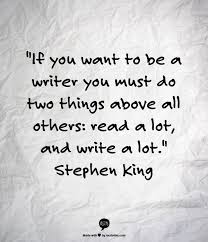
No matter what kind writing you want to do, you must read the kind of writing you plan to write. This is the maxim of every writer I know.

You also need an imagination. Now where does your imagination live? I imagine it comes from somewhere inside of you. The gut? The unconscious? Your heart? Your brain? It’s really difficult to say but I do know how to access it.

First you put away your editor. Your editor will always get in your way. Second, put a pen in your hand and piece of paper in front of you. Then start writing. Don’t think, don’t stop, let your imagination run wild. It doesn’t matter if what you write stinks. It’s the accessing of your imagination that counts. If you happen to write something good, go to your computer and enter the text you’ve written then keep on writing. You can edit later. The point is, get it down and keep on writing.

Next is craft. I know many don’t want to take the time or effort it takes to improve their craft. But if you want to be a successful writer, you must improve your craft. One way to do this is to join a writing group. You also must continue to read. Reading provides inspiration and education.

It provides education through the way the writer writes. There are also many books out there that are instructional. One of the books I’d recommend is 1,001 Tips for Writers by William A. Gordon.

If you have to mimic this author’s prose, go ahead. But don’t leave it there. Try to write your own way. A successful writer has his or hers unique style. Mimicking other writers is only a way to begin to craft your own style. This might take weeks or even years, so a writer needs tenacity.

Doesn’t matter what you write, you need to access your brain, your imagination and create your own style. You also need to dig deep inside of you and pull out memories, secrets and things you don’t want to remember.

So start accessing your memories and your imagination, beginning now….

Sue Powers has a dazzling array of publishing credits. Among her favorites are New Millennium Writings, StoryQuarterly, Another Chicago Magazine, Happy, Facets, The Writer’s Place and Samizdada. She’s won some writing awards and been nominated for others. She now has 15 published stories.